Discernment of Spirits in the Bible

by Ramon L. Bautista, S.J.

0.00

Available

login to download this publication
BACK TO:  SERIALS   |   BOOKS   |   SHOP |   CONFERENCES

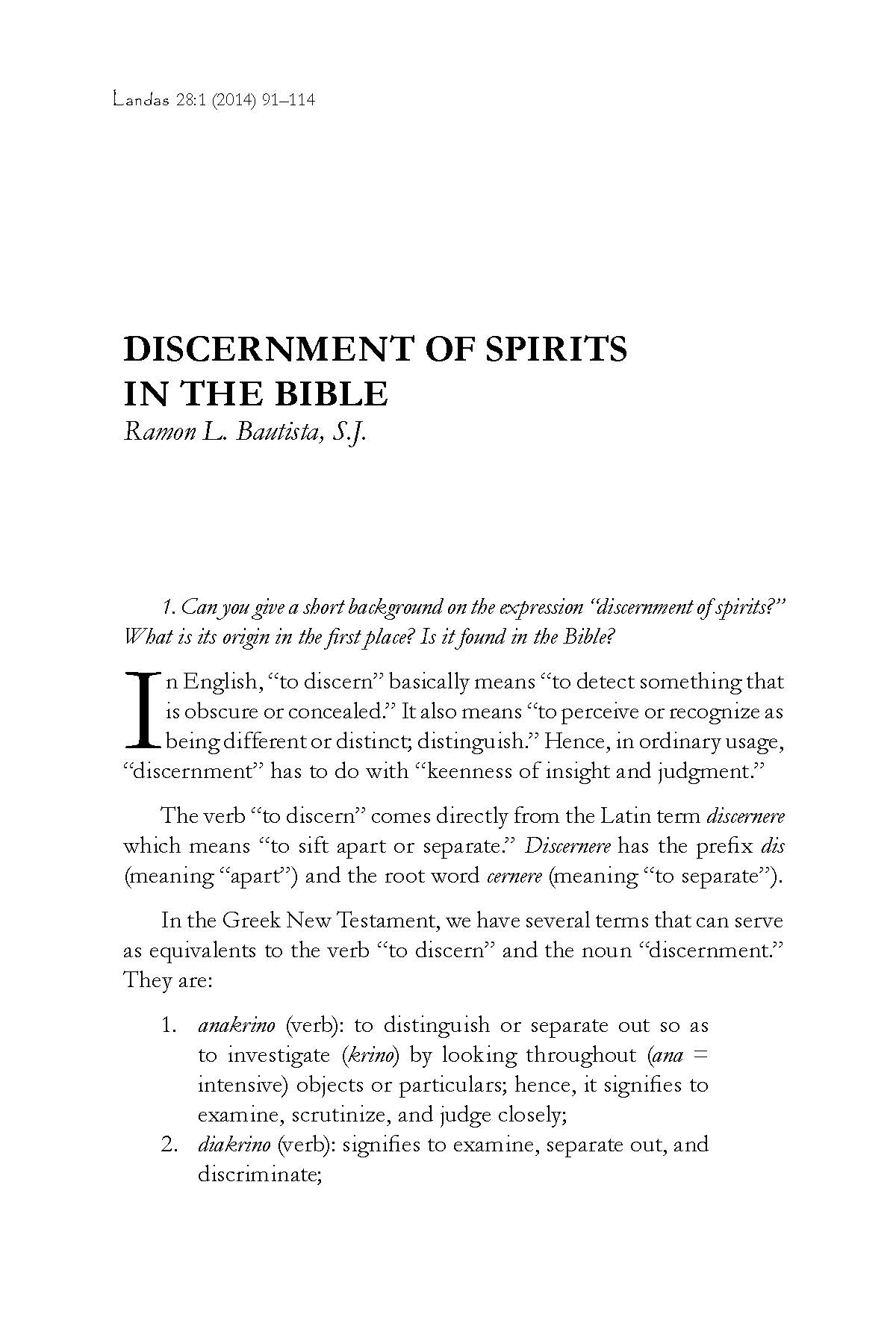
Ramon L. Bautista, S.J. (“Discernment of Spirits in the Bible”) notes that there are only a couple of explicit references to “discernment of spirits” in the Bible: 1 Cor. 12:10 and 1 Jn. 4:1. There is no systematic treatment of the subject in the OT, but the Biblical characters often dealt with the conflict between the good and evil spirits. “Needing careful discretion, like all of us today, these OT individuals,” according to Bautista, “had to ask pivotal questions in their own search for greater truth and meaning in their lives.” Thus, the practice of distinguishing the various kinds of opposing spirits is already well attested in the Hebrew Scriptures, even if both good and bad spirits are initially attributed to God as their source and only later on is the evil spirit no longer attributed directly to God. No matter how strong the influence of these spirits, the person always has the freedom of choice. In the NT, the evangelists deal implicitly with discernment in some of the parables and sayings of Jesus (e.g., Mt. 13:24–30; 25:31–46; Mk. 1:23ff; etc.). Jesus even offers one criterion for discernment: “By their fruits you will know them” (Mt. 7:16, 20; Lk. 6:44). John’s gospel presents a number of polarities which are matters for discernment, e.g., spirit and flesh (Jn. 3:6), light and darkness (Jn. 3:19), etc. Paul’s letters attest to many instances when he needed to make decisions regarding issues he faced in his mission (e.g., imposition of circumcision on gentile converts, observance of dietary laws, etc.).  – from the Editor’s Preface

Discernment of Spirits in the Bible

SKU LANDAS-803 Category

Ramon L. Bautista, S.J. (“Discernment of Spirits in the Bible”) notes that there are only a couple of explicit references to “discernment of spirits” in the Bible: 1 Cor. 12:10 and 1 Jn. 4:1. There is no systematic treatment of the subject in the OT, but the Biblical characters often dealt with the conflict between the good and evil spirits. “Needing careful discretion, like all of us today, these OT individuals,” according to Bautista, “had to ask pivotal questions in their own search for greater truth and meaning in their lives.” Thus, the practice of distinguishing the various kinds of opposing spirits is already well attested in the Hebrew Scriptures, even if both good and bad spirits are initially attributed to God as their source and only later on is the evil spirit no longer attributed directly to God. No matter how strong the influence of these spirits, the person always has the freedom of choice. In the NT, the evangelists deal implicitly with discernment in some of the parables and sayings of Jesus (e.g., Mt. 13:24–30; 25:31–46; Mk. 1:23ff; etc.). Jesus even offers one criterion for discernment: “By their fruits you will know them” (Mt. 7:16, 20; Lk. 6:44). John’s gospel presents a number of polarities which are matters for discernment, e.g., spirit and flesh (Jn. 3:6), light and darkness (Jn. 3:19), etc. Paul’s letters attest to many instances when he needed to make decisions regarding issues he faced in his mission (e.g., imposition of circumcision on gentile converts, observance of dietary laws, etc.).  – from the Editor’s Preface

AuthorRamon L. Bautista, S.J.
Volume No.28
Serial No.1
Start Page91
End Page114
Publication SeriesLANDAS
FormatEbook
0

Publication Cart

Quantity: 0 Items: 0
The Cart is Empty
No Product in the Cart!
0.00
0.00
₱0.00

We serve cookies on this site to analyze traffic, remember your preference, and optimize your experience.