
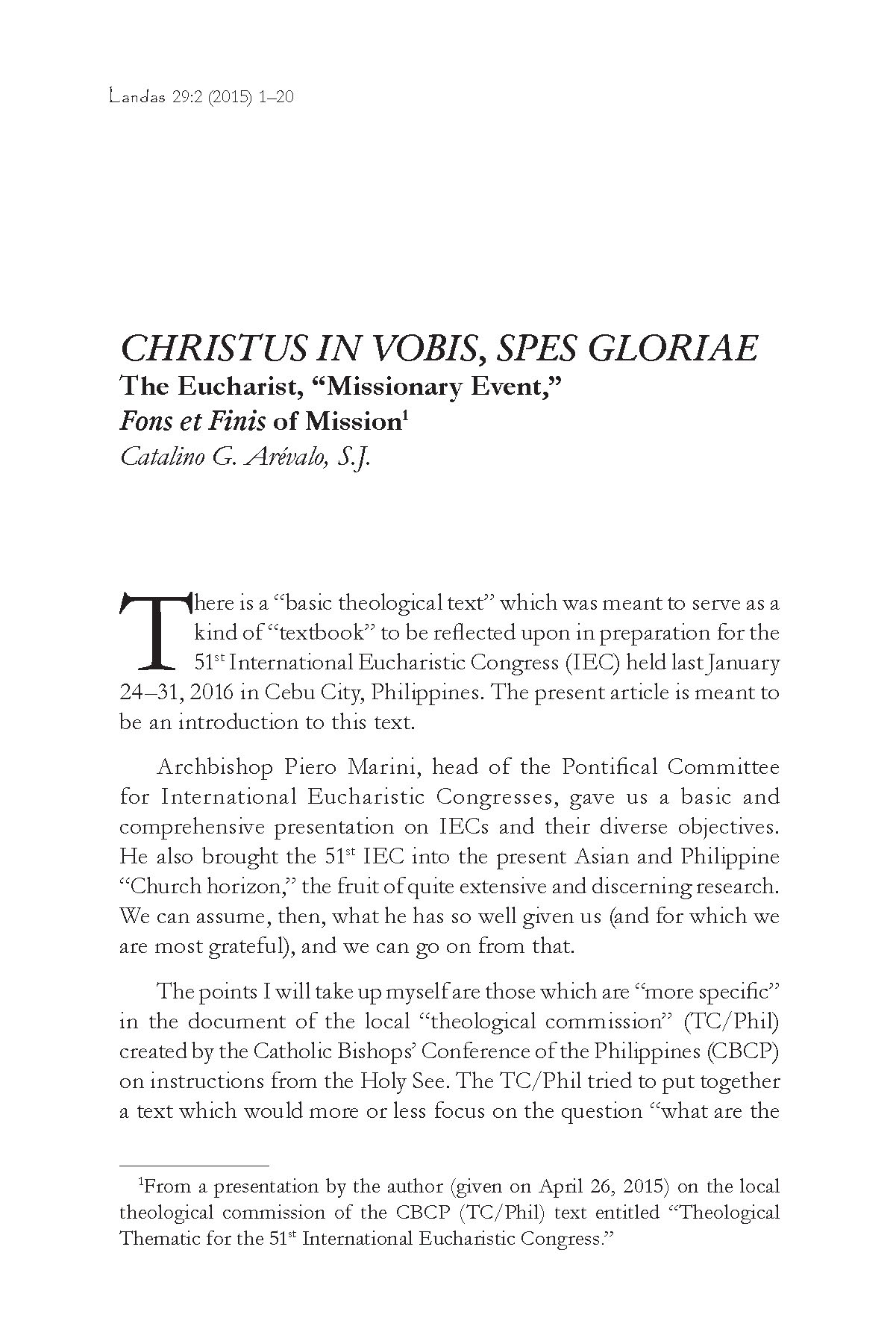
In a speech he gave at the National Orientation on the Catechism of IEC 2016, Catalino G. Arévalo, S.J. (“Christus in Vobis, Spes Gloriae: The Eucharist, ‘Missionary Event,’ Fons et Finis of Mission”) explains the theological significance of Col. 1:24–29. He notes that this scripture passage is a “missionary text” which deals with St. Paul’s tireless effort to bring the redeeming and elevating presence of Christ to the people of Colossae. Paul reminds the Christian community there that Christ—“in whom all the fullness of divinity dwells in bodily form” (Col. 2:9)—is already in them and among them. He is the hope of glory (kavodh)—the manifestation of God’s presence (shekinah) long awaited by the Jews to return to the Temple but now residing in the Body of Christ, the New Temple (cf. John 2:19–21). Arévalo notes that “applying this theology of ‘Christ in/among you’ directly to the Eucharist would not really be difficult for us who accept in faith the mystery of the Eucharist” (9). We believe that in the Eucharist, the Paschal mystery of Christ, his saving deed, is made present in the community and in the world—“the event of the Cross and Resurrection abides and draws everything toward life” (CCC 1085). For this reason, the evangelizing mission of the Church draws its efficacy from the Eucharist and culminates in its celebration of our communion with God (fons et finis of mission). – from the Editor’s Preface
